

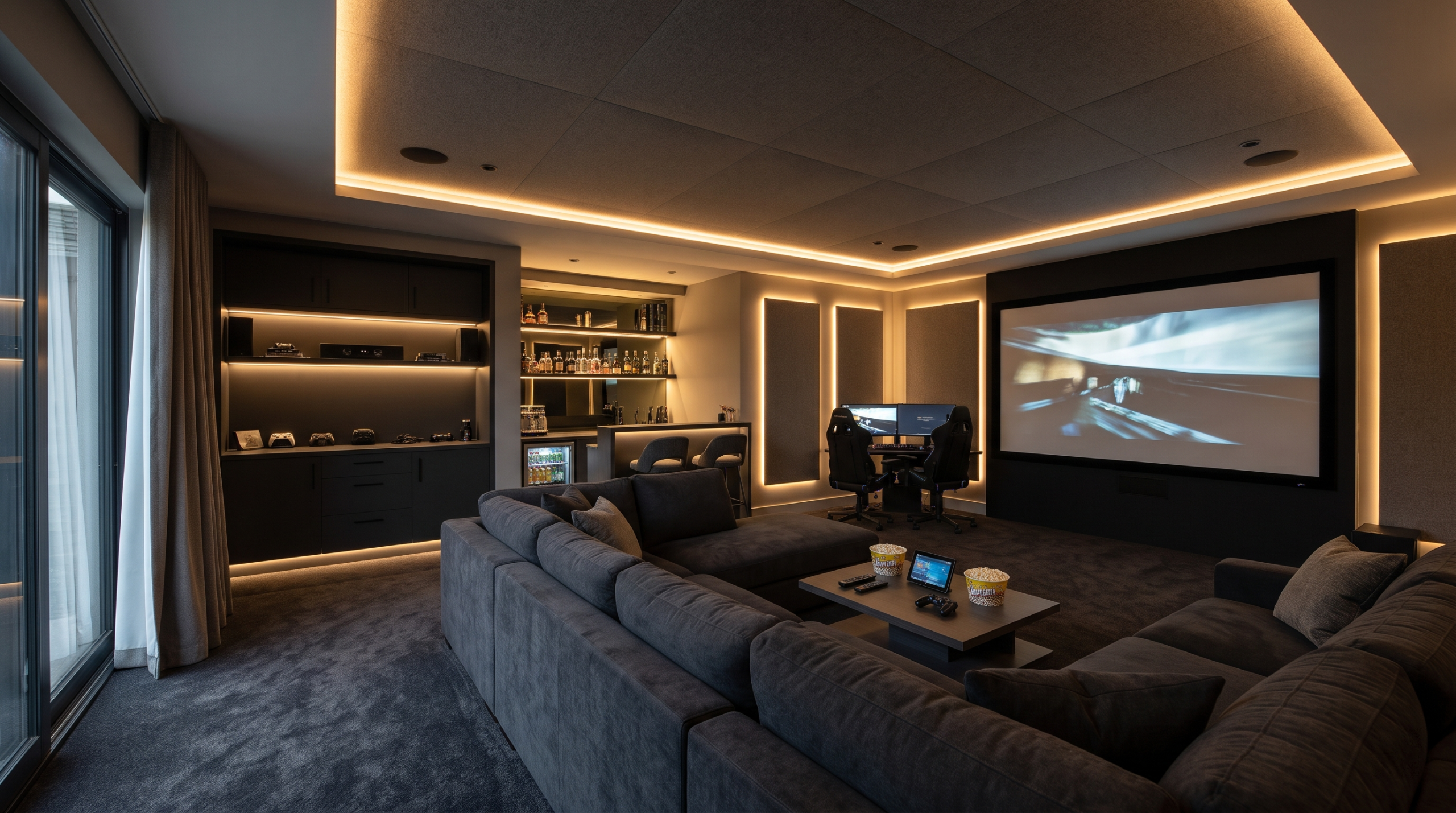
Film night starts, and within ten minutes someone needs the table for homework, someone else wants the football on, and Sunday’s board game is still spread across the coffee table. Most living rooms were never meant to carry that much. They get asked to be a cinema, a games room, a quiet corner and the place guests sit, often in the same evening.
That pressure is why more homeowners are giving entertainment its own space. Rather than stretching the living room further, they are setting aside a room, or a separate building, for one activity and kitting it out properly. Here is how those spaces work, what makes them enjoyable to use, and how to fit one in without upsetting the rest of the house.
Why the Living Room Can No Longer Do Everything
A lot of hobbies have moved home. Streaming has made the sofa the default cinema, consoles and VR headsets need floor space and a decent screen, and plenty of people who picked up an instrument, a craft or tabletop gaming have kept at it. Hybrid working has also claimed the spare room in many homes, so the shared rooms end up doing double or triple duty.
A dedicated space gives the noise, the kit and the mess somewhere to live. The main living areas get to be calm again, and the hobby no longer has to be packed away every night.
The Entertainment Spaces Homeowners Are Creating
Games Rooms
A games room tends to be the most sociable option. A pool or table football table needs clearance around it for cues and elbows, so measure the table plus a full cue length on each side before you buy anything. Consoles and board games need less floor area but far more storage. A bold feature wall gives the room its own character without the colour scheme spilling into the rest of the house.
Home Cinemas
What separates a cinema from a TV room is control over light, sound and seating. Blackout blinds or heavy curtains matter more than the size of the screen, and darker walls cut down reflected glare. A projector suits a long room, while a large TV suits a smaller, squarer one.
Music Rooms
A music room is mostly about keeping sound in. Rooms on a party wall are the hardest to treat, so an outside wall or a separate building gives you an easier starting point. Rugs, curtains and full bookshelves tame echo inside the room, although they do little for the neighbours.
Multi-Purpose Leisure Rooms
For many homes, one flexible room is more realistic than three dedicated ones. A sofa bed, a wall-mounted screen, a fold-down table and good storage let the same space work as a gaming den, a craft room or a place for guests. Decide which use comes first, design for that, and let the others fit around it.
Which Entertainment Space Suits Your Home?
Answer five quick questions to see which kind of space fits the way your household lives.
Your best fit
The Practical Details That Make a Room Work
- Lighting: Layer it. Use bright overhead light for setting up and cleaning, dimmable lamps for evenings, and nothing that reflects off the screen.
- Acoustics: Hard floors and bare walls make noise bounce around. Rugs, curtains, upholstered seating and acoustic panels absorb it.
- Seating: Match it to the activity. A cinema needs comfortable seats with clear sightlines, and a games room needs chairs or stools that are easy to move.
- Storage: Closed cupboards keep controllers, cables, games and instruments out of sight, so the room is always ready to use.
- Space: Measure for the activity, not the furniture. A room that technically fits a pool table but leaves no room to play will frustrate everyone.
Keeping the Main House Working
Converting a spare bedroom, loft or garage is the usual route, and each one has trade-offs. Losing a bedroom may matter when you come to sell. Lofts can be hard to soundproof from the rooms below, and garages often hide damp or poor insulation. Run through some quick pre-renovation checks before you commit, so the conversion doesn’t uncover a bigger job halfway through. Where you can, keep the entertainment space away from bedrooms and home offices.
Taking the Fun Into the Garden
When there is no spare room to give up, the garden is often the answer. A separate building puts the noise and late nights at a distance from the house and leaves every indoor room as it was. Placement affects how the rest of the garden gets used, so it’s worth reading up on garden renovations and value first.
Check planning before anything else. Under the Planning Portal’s permitted development rules, outbuildings in England must be single storey and can’t sit in front of the house’s principal elevation. Within two metres of a boundary they are limited to 2.5 metres tall. These rights apply to houses, not flats or maisonettes. Building regulations are a separate question. The Planning Portal’s garden office guidance says they don’t generally apply to a building under 15 square metres with no sleeping accommodation.
For entertaining all year round, insulation and power are the practical details to get right. Bespoke buildings such as the Surrey Hills Garden Buildings leisure rooms can be specified with heating, data points and audio-visual installations, which is worth knowing if the plan involves a projector, a console or an amplifier. Whichever supplier you use, ask about the base, ventilation and ongoing timber care before you order.
How Different Households Might Use the Space
- A family with teenagers turns the garage into a games room with consoles and a sofa, so the living room stays quiet for younger children at bedtime.
- A couple who entertain put up a garden building with a small bar, speakers and dimmable lighting, which keeps gatherings away from the kitchen.
- A keen musician chooses an insulated outbuilding at the far end of the garden, lined with rugs and panels, to practise without negotiating quiet hours.
- Empty nesters turn a former bedroom into a snug cinema with blackout blinds and two recliners.
Giving Film Night Its Own Room Again
The living room doesn’t have to be the cinema, the games table and the quiet room all at once. When one activity has its own space, whether that’s a converted bedroom or a building at the end of the garden, the kit stays set up, the noise stays put and the rest of the house gets its calm back. Start with how your household actually spends its evenings, measure for that, and plan the lighting, sound and storage before you choose the furniture.

